
A Real Story About Risk, Psychology, and What Actually Drives Decisions
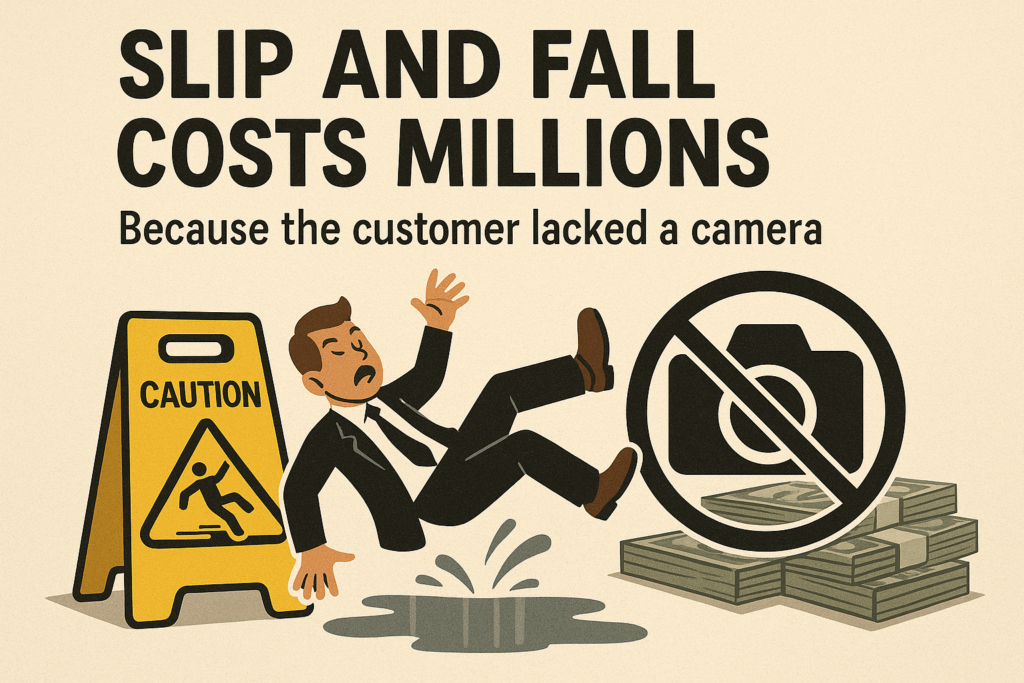
A medical facility in Brevard County faced every business owner’s nightmare: a slip and fall at their entrance that resulted in a settlement of over a million dollars.
But here’s what makes this story worth telling: they had a chance to prevent it.
Two years before the lawsuit, we were on-site installing door access control and security cameras throughout their facility. We offered to add a camera at that entrance—the one that would later become the site of the incident.
They declined. Too expensive.
Fast forward: the lawsuit happens. Over a million dollars in settlement costs.
They came back to us. Now they wanted that entrance camera. Single camera, professional installation, quality equipment. $1,500.
They spent six months “thinking about it.” Re-quoting. Negotiating. Asking for discounts. Trying to get the price down.
We eventually stepped back—not because they were bad people or impossible clients, but because we realized something: they were willing to risk another million-dollar lawsuit rather than pay a fair price for prevention.
That’s not a client relationship. That’s enabling self-destructive decision-making.
Why Smart People Make Puzzling Decisions
Here’s the thing: this facility wasn’t broke. They had staff, equipment, operational budgets. The $1,500 wasn’t the issue.
The real issue? The million felt like bad luck. The $1,500 felt like a loss.
One already happened—it’s in the past, abstract, already absorbed into the financials. The other is money leaving the account right now, concrete and immediate.
This isn’t stupidity. It’s human psychology. And it affects all of us in different ways.
The Pattern We All Recognize
Think about your own business for a second. How many times have you:
- Put off that backup solution until you had a data scare?
- Delayed the security upgrade until you heard about someone getting breached?
- Skipped the maintenance until something failed at the worst possible time?
- Hesitated on insurance until you needed it?
We all do some version of this. The distant catastrophe doesn’t feel as real as the immediate cost.
Until it does. And then we realize the “expensive” prevention was actually the cheaper path.
What Makes This Hard
There are real reasons businesses hesitate on preventive measures:
Decision Fatigue: After dealing with a crisis—lawsuits, insurance claims, financial damage—making another decision feels exhausting, even when it’s straightforward.
Budget Approval Complexity: The person who sees the need (facilities director, operations manager) isn’t always the person who approves spending. And selling prevention is always harder than fixing something actively broken.
Competing Priorities: There’s always something else that seems more urgent. The thing that might happen never feels as pressing as the thing that’s happening right now.
Optimism: “It happened once, but it probably won’t happen again.” Sometimes that’s true. Sometimes it’s expensive hope.
We get it. These are real constraints, not excuses.
When Prevention Becomes Urgent
The challenge is that prevention only feels urgent after you’ve paid the price of not having it.
That medical facility now understands—deeply, expensively—why video documentation matters. But understanding the need and acting on it are two different things.
And that gap? That’s where the real cost lives.
Because the risk doesn’t go away just because you’ve already paid once. If anything, having been through it once means you know exactly what’s at stake.
The Real Question
If you’ve experienced a costly incident—lawsuit, liability claim, security breach, equipment failure—and you’re still “thinking about” the preventive measure, there’s a question worth asking:
What would actually need to happen for you to move forward?
Not rhetorically. Actually think about it:
- Another incident?
- A bigger settlement?
- Someone getting hurt?
- A regulatory penalty?
Because if the answer is “I need something worse to happen first,” that’s worth examining.
What Drives Action (For Real)
The businesses that act on prevention before the next crisis share a few things:
Clear Decision Authority: Someone who can say “yes, let’s do this” without three levels of approval.
Perspective Shift: They stop seeing prevention as “spending money” and start seeing it as “buying certainty.” The cost is known. The risk is not.
Future Thinking: They ask “what does this cost us if it happens again?” not just “what does this cost us now?”
Trust in Expertise: When someone they trust says “you need this,” they don’t spend six months shopping for cheaper options. They ask “when can we start?”
None of this is revolutionary. But it’s surprisingly rare in practice.
Why We Sometimes Step Back
We work with businesses that are ready to act—not because they’re richer or smarter, but because they’ve made the internal decision that prevention is worth the investment.
When we see a client stuck in the loop—quoting, re-quoting, hesitating, negotiating—we know the issue isn’t the price. It’s something deeper: competing priorities, decision-making structure, or just not being ready yet.
And that’s okay. But we’re not the right fit for that situation.
We’d rather work with:
- Facilities that understand risk management as a business function
- Decision-makers who can evaluate need and act on it
- Organizations where prevention is valued, not just reacted to after the fact
There’s no judgment in that. It’s just knowing where we’re effective and where we’re not.
If You’re Evaluating Security, Surveillance, or Risk Prevention
Here are some questions that might help:
Assess Current Exposure:
- If an incident happened tomorrow, do you have the documentation to defend yourself?
- What would it actually cost you—financially, legally, operationally?
- Is that risk acceptable, or is it just invisible right now?
Get Real Information:
- Talk to someone who understands the risk and the solutions
- Get an honest assessment, not a sales pitch
- Understand what you’re actually buying (and what you’re risking by not buying it)
Make a Decision:
- Yes, implement it
- No, accept the risk consciously and move on
- But don’t stay in “thinking about it” mode for a year
The worst outcome isn’t choosing wrong. It’s perpetual delay while pretending you’re being careful.
About DSI
Digital Systems Integration has been providing video surveillance, access control, structured cabling, and IT infrastructure for Brevard County businesses since 1994.
We work with clients who are ready to solve problems—not just think about solving them. If you’re at that point, we’d be glad to help.
Phone: (321) 676-9074
Email: solutions@getdsi.com
Web: https://getdsi.com
And if you’re still evaluating? That’s fine too. We’ll be here when you’re ready—hopefully before the next incident.